
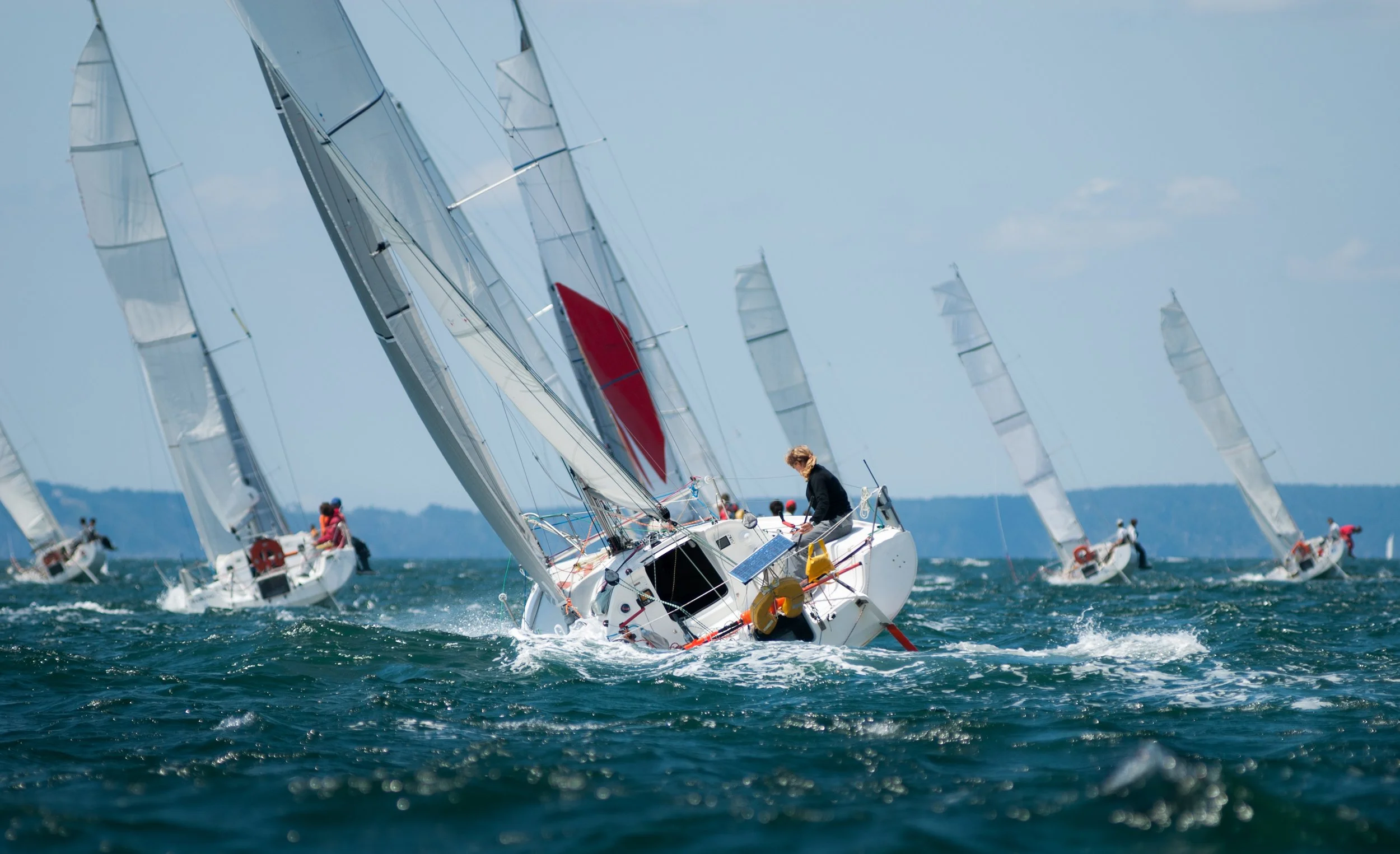
Sailing single-handed has a wonderful way of clarifying what actually matters on a boat.
When you have a full crew on board, minor annoyances are easy to ignore. If a halyard sticks, someone wanders forward to sort it out. If the breeze builds faster than the forecast promised, two people jump on the foredeck to wrestle down a headsail while another holds the boat head to wind.
When you’re sailing solo, that margin disappears pretty quickly.
Suddenly, you are the skipper, trimmer, navigator, bowman, and tea maker all at once. The best sail control systems for single-handed sailing aren’t necessarily the flashiest or most complicated pieces of hardware in the chandlery. They are the ones that keep you safely in the cockpit, work smoothly under load, and don’t decide to throw a tantrum just as Bass Strait starts living up to its reputation.
If you’re setting up a yacht for solo passages—or just trying to make short-handed cruising a lot less stressful—here is what genuinely earns its keep on deck.
1. A Bullet-Proof Headsail Furler (That Doesn’t Jam Under Load)
For most modern cruising boats, a reliable headsail furler is one of the biggest upgrades you can make for solo sailing. Clambering onto a pitching foredeck at two in the morning to drop a flogging genoa is nobody’s idea of a good time.
A reliable headsail furler lets you roll away sail area in seconds without ever leaving the cockpit. However, not all furlers are created equal—especially when the wind pipes up.
When you are solo, you need a system built for real working loads, not just sunny afternoon drifts:
Smooth bearings under pressure: Look for quality bearing systems, often using Torlon or other engineered bearing materials, that continue turning smoothly under heavy loads.
No high-maintenance routines: You want gear that thrives on salt air and the occasional fresh-water rinse—not something that demands strip-downs, grease guns, and prayer before every passage.
Proper sizing: Don’t pick a furler based on boat length alone. Matching the system to your forestay pin and wire diameter ensures the foil and drum won’t bind up when things get lively.
(Yes, we’re biased—we build the Tasman, Furneaux, Schouten, and Maatsuyker range in Tasmania specifically so solo and offshore sailors have a furler they can swear by, not swear at. Even Ken Gourlay relied on Reefit systems through 70-knot Southern Ocean blasts on his non-stop solo circumnavigation).
2. All Control Lines Led Aft to the Cockpit
Before spending big money on fancy hardware, look at your deck layout. The best solo boats allow you to hoist, trim, reef, and drop your sails from one central working area.
Routing your main halyard, reefing lines, outhaul, and boom vang back through deck organisers and rope clutches means you can adjust sail shape the moment the boat starts feeling overpowered. If reefing takes thirty seconds from behind the wheel instead of five minutes of foredeck gymnastics, you’ll actually do it on time—instead of muttering "we probably should've reefed earlier" while the lee rail is underwater.
3. Single-Line or Two-Line Slab Reefing (With Lazy Jacks)
When the wind builds, reducing mainsail area needs to be simple and predictable. While in-mast furling has its fans, most coastal and offshore solo sailors still prefer the reliability and sail shape of a traditional slab-reefed main—provided it is set up properly:
Single-Line Reefing: Uses internal boom blocks to pull both the tack and clew down simultaneously with one line from the cockpit. It keeps cockpit clutter to a minimum and works brilliantly on small-to-medium yachts.
Two-Line Slab Reefing: On larger boats where friction starts building up in single-line setups, separate tack and clew lines give you much easier mechanical advantage.
Lazy Jacks & a Stack Pack: Dropping a mainsail solo without lazy jacks usually ends with a mountain of Dacron draped over the companionway. Lazy jacks catch the sail neatly on the boom so you can tidy up once you’re safely anchored or tied up.
4. Self-Tailing Winches (And One Well-Placed Electric Winch)
If you are still using standard winches on a solo boat, you are working far too hard. Trying to steer with your knee, hold tension on a loaded sheet with one hand, and crank a winch handle with the other is a quick way to run out of hands.
Self-Tailing Winches: An absolute must for solo sailing. The jaws hold the tail securely so you can put both hands on the handle—or tend the helm while trimming.
Electric Winch: If your budget stretches to one electric winch, put it on the coachroof where your halyards and reefing lines meet. It takes the heavy grunt work out of hoisting a full-batten main or furling a stubborn headsail in 25 knots of breeze.
5. A Self-Tacking Jib
Tacking an overlapping genoa solo means releasing the loaded sheet, turning the boat, pulling in metres of slack on the new side, and grinding it tight—all while watching for traffic and channel markers.
A self-tacking jib runs on a curved track just forward of the mast. When you put the helm over, the sail slides across the deck on its own with zero sheet handling. You give up some light-air performance compared with a large overlapping genoa, but the gain in simplicity is hard to ignore for short-handed sailing.
6. Your Silent Crewmate: A Proper Below-Deck Autopilot
Strictly speaking, an autopilot isn’t a sail control system—but none of the gear above works smoothly without one.
Before you touch a halyard, furling line, or reefing clutch, your autopilot holds the boat steady on course or head to wind. A robust below-deck linear or hydraulic autopilot acts as the steady helmsman you don’t have on board, giving you the time and headspace to handle sail changes calmly rather than rushing.
7. Jacklines and Tether Points
Not really a sail-control system, but arguably more important than any winch or furler.
Before upgrading any hardware, make sure you can move safely around the boat. Proper jacklines, harness attachment points, and a quality tether are arguably the most valuable pieces of solo-sailing equipment you'll ever own.
Keep It Simple, Keep It Reliable
The golden rule of single-handed sailing is simple: every extra complication is another thing to troubleshoot by headlamp in a lumpy sea.
Focus on strong, straightforward gear with minimal failure points. Keep your lines clear, wash the salt off your hardware when you get back to the dock, and make sure the gear on your bow is built for the worst day of your trip—not just the best one.
Setting up your boat for solo or short-handed sailing?
Whether you’re refitting an existing cruiser or trying to make sense of your forestay measurements, have a look at our Online Furler Selector or drop us a note at sails@reefitsystems.com.au.
No sales fluff—just practical advice from people who spend far too much time thinking about bearings, load paths, and keeping sailors off the foredeck.