Where the Problem Became the Solution
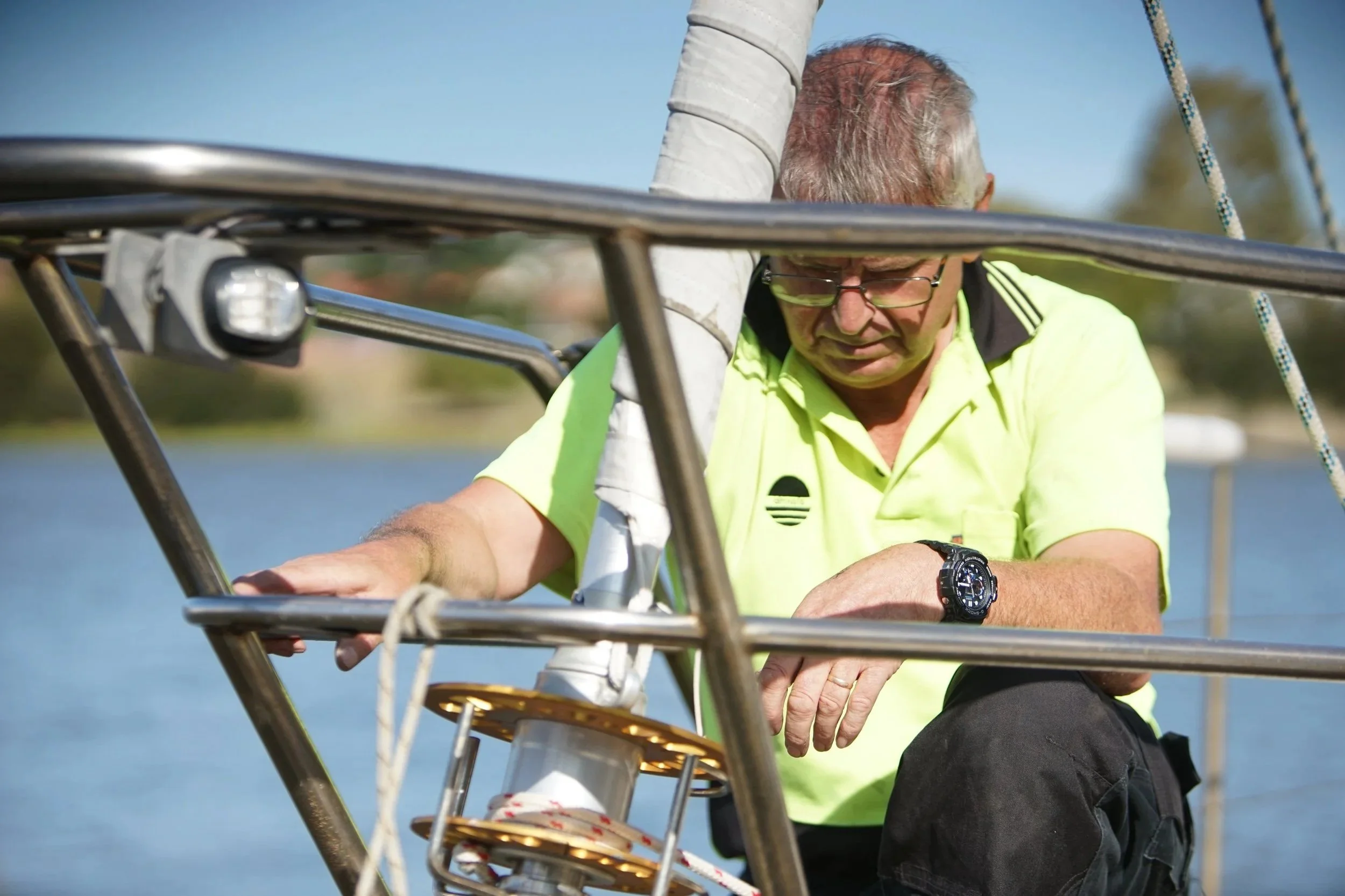
The story begins with Almasts, a respected local rigging business servicing the Tasmanian sailing community. Reefit founder Mitch Ranson started working there straight after school, learning the trade from the ground up — first sweeping floors, then assisting riggers, and eventually becoming a rigger himself.
Over time, Mitch became known for his practical approach and deep understanding of rigging systems, with his knowledge built through years of working on everything from coastal cruisers to offshore yachts.
Where It Began
Working daily in the rigging trade, one issue kept surfacing — furling systems that didn’t live up to their promise.
Systems that jammed under load.
Bearings that seized.
Components that wore out far too quickly.
Corrosion from dissimilar metals.
Many were well-marketed but poorly executed. And as the person responsible for fixing them, Mitch saw firsthand where they failed — and why.
After years of repairing the same problems over and over again, the question became simple:
“Why keep fixing flawed designs when you can build something better?”
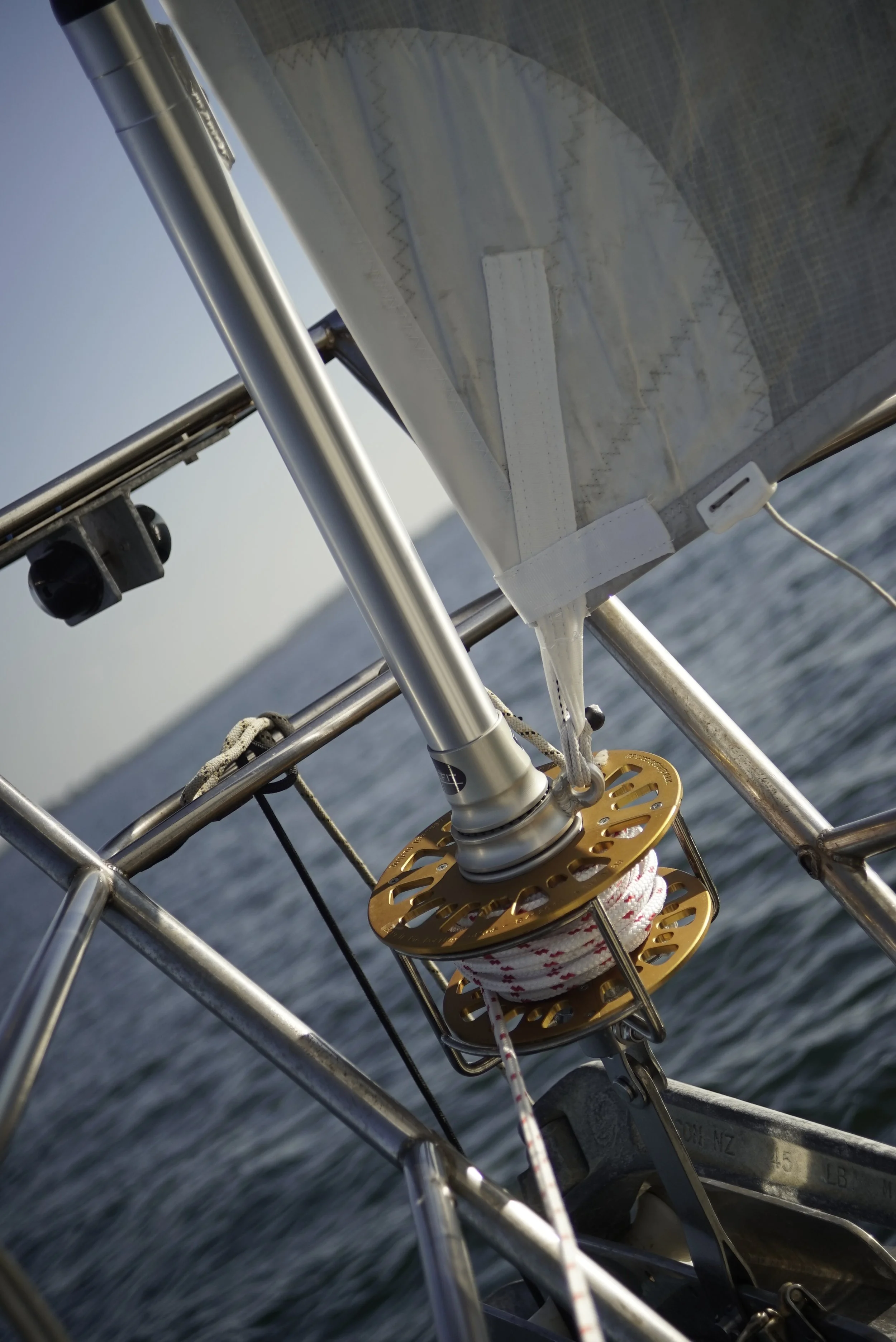
The Beginning of Reefit furlers
What began as frustration quickly turned into innovation.
Mitch started designing and manufacturing his own furling systems — not for mass production, but to solve real problems he encountered every day on the job. Each design decision came from hands-on experience, with a focus on eliminating failure points, reducing maintenance, and improving serviceability.
Instead of chasing trends or aesthetics, the approach was straightforward: build something that works properly and keeps working.
Reefit grew from this workshop mindset into a dedicated product line, grounded in practical rigging knowledge and real-world use.
Our Philosophy
Reefit has always been driven by engineering first — not marketing.
Every system is designed with a clear set of priorities:
Durability — built to handle load, wear, and time
Serviceability — easy to maintain and repair when needed
Real-world performance — designed for actual sailing conditions, not theoretical limits
Strength where it matters — thicker sections, robust connections, and properly engineered components
Simplicity — fewer parts, fewer failure points, and no unnecessary complexity
“After years of fixing other people’s furlers, you start to see the same problems over and over again. Reefit came from wanting to eliminate those problems entirely — to build something that just works, without the compromises.”
Mitch Ranson
Today
What started as a practical solution inside Almasts has grown into Reefit, a brand trusted by riggers, sailmakers, offshore cruisers, and sailors who value dependable performance over marketing claims.
Despite that growth, the approach hasn’t changed.
Every product is still influenced by hands-on experience, each design is tested against real-world use, and every system is built with one goal in mind:
To work — reliably, simply, and without fuss.
A Defining Moment, From Devastation to Decision.
There was a point when it could have all come to an end.

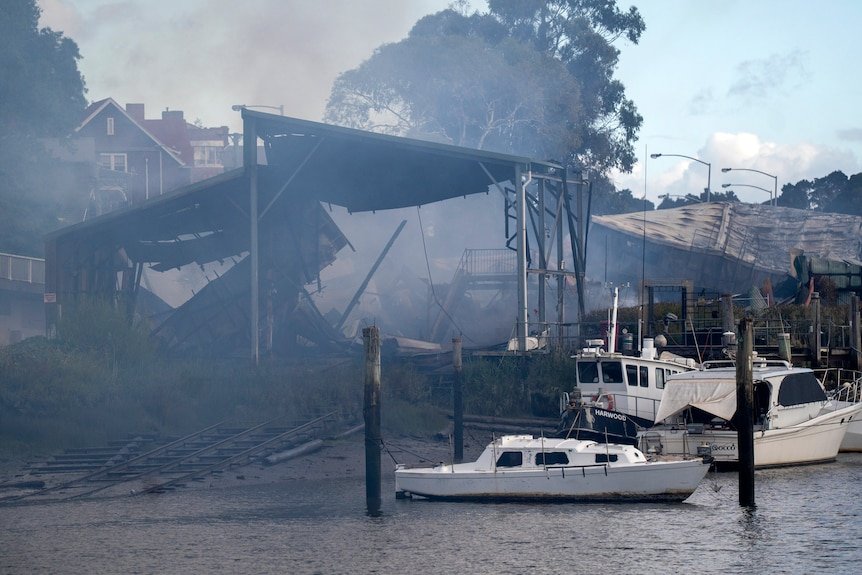
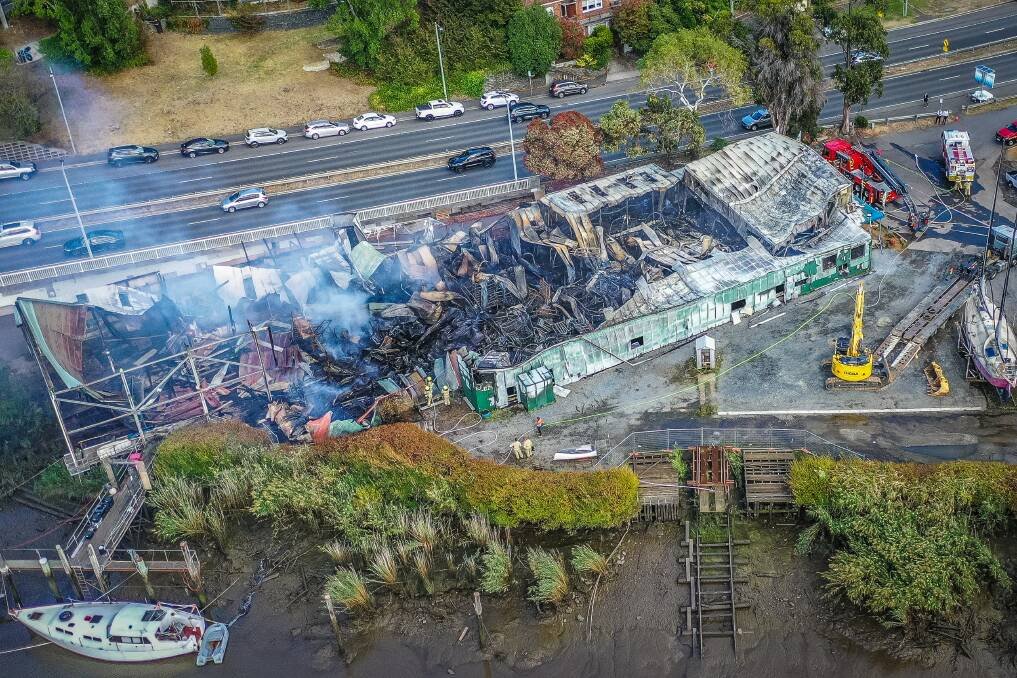
In early March 2026, a fire destroyed the original Almasts manufacturing facility at Tamar Marine.
Production stopped overnight. For a small, specialist manufacturer, the loss of machinery, tooling, and infrastructure is often enough to prevent recovery. Restarting from that position is difficult—and in many cases, doesn’t happen.
In the weeks that followed, the future of both Almasts and Reefit was uncertain.
What happened next was unexpected.
Yacht owners, riggers, sailmakers, and offshore sailors began getting in touch—not to ask about alternatives, but to ask when Reefit furlers would be available again. They weren’t looking for something different. They wanted the same system they already trusted. Importantly, the core of the business still remained untouched. Design data, drawings, supplier contacts, and manufacturing methods had been preserved. The knowledge behind the system—built over decades—was still there.
From this, Reefit Yacht Systems was established, focused specifically on the manufacture and ongoing development of Reefit furling systems. This provided a clear path forward, separating the product from its previous structure and allowing it to continue with greater focus and capability. The design itself did not change.
Mitch Ranson, founder of Almasts, continued forward into this new business structure, bringing all his experience and expertise with him.

Manufacturing has moved to newer, more capable equipment, allowing increased production rates, lower scrap rates, and other manufacturing efficiencies.
At the same time, support systems were strengthened. Stock levels, parts availability and technical support have been revamped with a focus on responsiveness and maintaining our hassle-free 10-year warranty.
The objective was not to redesign Reefit, but to build the same proven system with greater precision and control.
The Reefit systems produced today are not a replacement for what came before. They are the same design—refined through experience and now manufactured with greater consistency.
The fundamentals remain unchanged:
strength where it counts
durability in service
reliable performance over the long term
Because the goal has always been the same—to build systems that continue to work, years after installation.