
Installation & Support
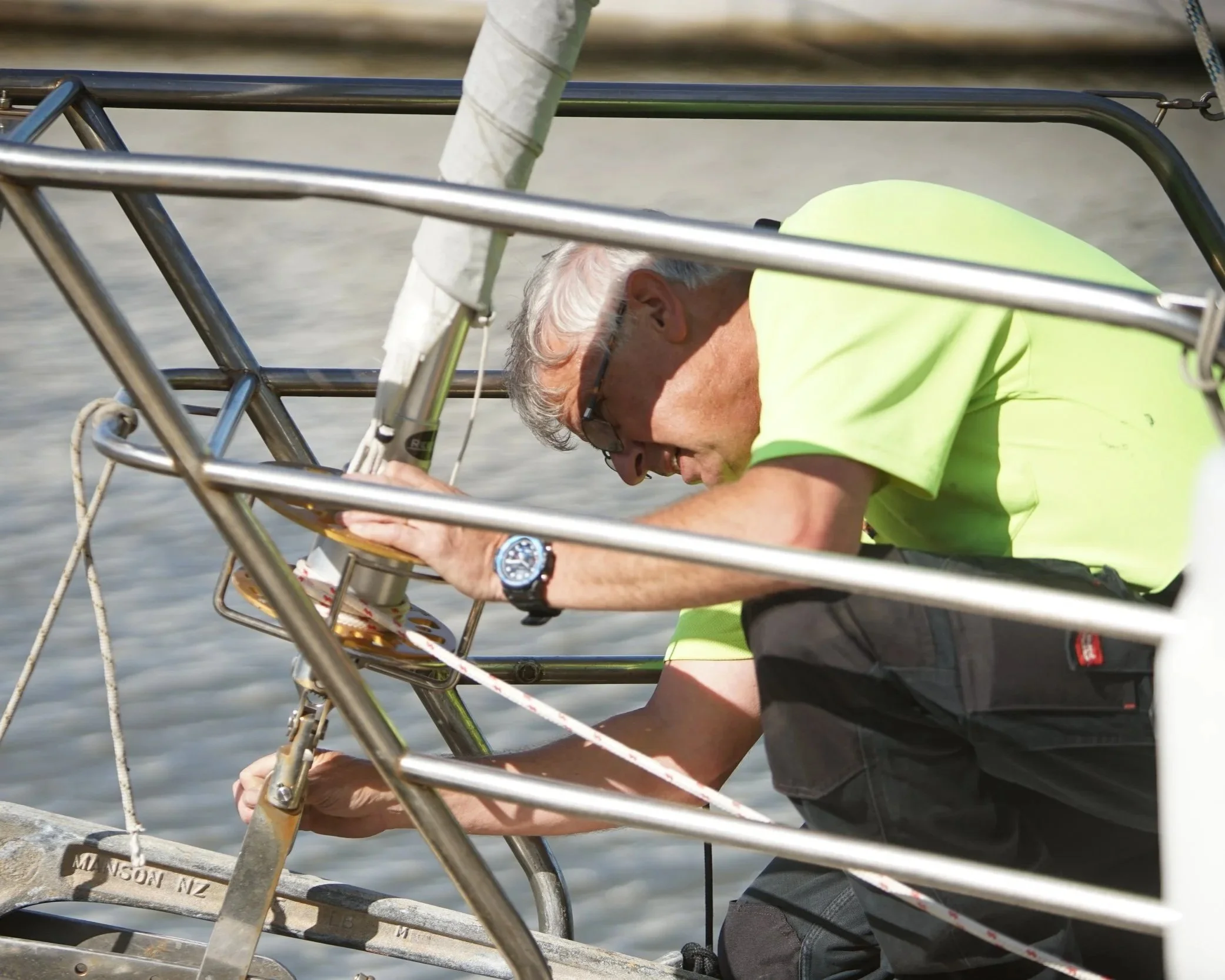
Designed for Practical Installation and Long-Term Support
Reefit furlers are designed to be practical to install, simple to maintain, and easy to live with over the long term.
Whether your system is being installed by a rigger, sailmaker, boatyard, or a capable owner, Reefit has been designed to reduce unnecessary complexity and make the installation process as straightforward as possible.
Each system is supported by clear instructions, practical component design, and direct product knowledge if you need help along the way.
Installation Overview
Reefit furlers are designed with real-world installation in mind.
The system uses practical foil sections, straightforward assembly steps, and standard rigging compatibility wherever possible. The aim is to make installation clear, efficient, and serviceable — without unnecessary proprietary parts or complicated assembly procedures.
Reefit systems are suitable for DIY installation by capable owners and crew, while also being straightforward for professional riggers and marine trades.
Key installation features include:
Practical foil sections supplied in manageable lengths
Picture-sequence installation instructions
Designed to suit standard rigging fittings
No extra cost turnbuckle tubes required
Easy lower-end access for rigging inspection and adjustment
Options for raised drum installations where required
Manufacturer support available if you are unsure
If you are not confident with rigging work, we recommend involving a qualified rigger.
Before You Begin
Before installing a Reefit furler, it is important to confirm that the correct model and installation setup have been selected.
The correct furler is not chosen by boat length alone. Rigging size, pin diameter, stay length, installation height, sail setup, and intended use all matter.
Before installation, check:
Boat make and model
Forestay length
Forestay wire diameter
Forestay pin diameter
Lower forestay fitting type
Existing rigging screw arrangement
Required drum height
Headsail UV strip side
Available clearance around bow fittings and anchor gear
If you are unsure, send us clear photos of your forestay and lower fitting before installation.
Choosing the Correct Model
Reefit furlers are sized primarily by the forestay clevis pin diameter, with forestay wire diameter used as a useful cross-check.
This makes model selection practical and easier to verify before purchase or installation.
If you are unsure which model you need, use the online selector or contact us with your boat and rigging details.
Helpful information to send:
Boat make and model
Forestay wire diameter
Pin diameter at the forestay fitting
Approximate forestay length
Photos of the lower forestay fitting
Whether you want the drum low or raised
Whether the installation is new rigging or existing rigging
To start the Online Selector, CLICK HERE
To contact Reefit for advice, CLICK HERE
DIY Installation
Reefit furlers are designed to suit capable DIY installation.
The installation process is supported by picture-sequence instructions and practical component design. One foil section is cut to length during installation, and the system is designed to avoid unnecessary drilling or complicated modifications.
That said, the forestay is a critical part of your rig. If you are unsure about any step or if your rigging is old, damaged, or difficult to inspect, we recommend speaking with a qualified rigger before proceeding.
DIY installation may be suitable if you are:
Comfortable working with rigging components
Able to follow technical instructions carefully
Confident with measuring and checking fittings
Able to safely lower, support, or manage the forestay as required
Prepared to ask for advice if something does not look right
If in doubt, ask first.
Professional Installation
Many Reefit furlers are installed by professional riggers, sailmakers, boatyards, and marine service businesses.
For trade installers, Reefit is designed to be practical and serviceable. The system works with standard rigging fittings, allows access for inspection and adjustment, and avoids unnecessary proprietary components wherever possible.
Professional installation is recommended if:
The rigging condition is unknown
The forestay is due for replacement
Mast access is difficult
The boat has unusual fittings or limited bow clearance
You are unsure about the stay length, drum height, or fitting compatibility
The boat is used for offshore or demanding sailing
We are also building a network of preferred Reefit resellers and installers. Contact us if you would like help finding support in your area.
Maintenance
Reefit furlers are designed for low maintenance.
There is no grease required, no seals to leak, and no complex servicing routine. In normal use, an occasional fresh-water wash is all that is required.
This is especially important in saltwater environments, where simple maintenance habits can make a big difference over the life of marine equipment.
Recommended maintenance:
Rinse the furler with fresh water periodically
Rinse more often after heavy salt exposure
Check the furling line for wear
Check that the sail furls smoothly and evenly
Inspect visible fittings during regular rig checks
Investigate any sudden increase in furling effort
If the furler becomes harder to operate, do not force it. Check the sail, halyard, furling line lead, drum, and forestay setup for halyard wrapping at the top of the forestay. This is the most common issue with all brands of furlers.
Rigging Inspection and Adjustment
One of the practical advantages of Reefit is easy access to the lower rigging area.
Reefit furlers are designed to accommodate normal stud/toggle rigging screws inside the furler. This means you do not need additional turnbuckle tubes, and the normal range of rig adjustment remains available.
To access the rigging screw, the drum assembly can be raised by removing two nuts and two collets.
This allows the rigging screw to be inspected or adjusted without unnecessary dismantling.
This helps with:
Rig tuning
Forestay inspection
Rigging screw access
Long-term maintenance
Professional service checks
Your forestay is hidden inside the foil, so practical access and regular rig inspection are important.
Halyard Wrap Prevention
Halyard wrap is one of the common problems associated with headsail furlers.
It occurs when the halyard wraps around the forestay or upper foil during furling. This can jam the system and, in severe cases, damage the foil or forestay.
Reefit supplies a simple halyard-wrap solution with each unit. Correct installation and setup remain important, but the system is designed to help avoid this common issue from the start.
To help prevent halyard wrap:
Follow the installation instructions carefully
Use the supplied Reefit halyard-wrap solution
Check the halyard lead and swivel position
Make sure the sail hoists correctly
Avoid forcing the furler if resistance suddenly increases
If you are unsure about the halyard setup, contact us before using the system under load.
Furling Direction and UV Strip Setup
Reefit furlers are designed to furl anti-clockwise and unfurl clockwise.
This means the headsail UV protection strip must be fitted on the starboard side of the sail.
This is an important installation detail, but it is simple to manage if checked before installation or before ordering a new headsail.
Simple rule:
UV strip on the starboard side
Furler furls anti-clockwise
Furler unfurls clockwise
If your existing sail has the UV strip on the port side, contact us before installation. The best long-term solution is usually to have the UV strip moved to the starboard side.
Raised Drum Installations
Some boats require the furler drum to sit higher above deck level.
This may be needed to improve clearance, suit the sail tack height, or avoid interference with bow fittings, anchor gear, pulpits, or deck hardware.
Reefit offers proper raised-drum options using engineered extension links.
Do not simply lift the sail and lash it higher. If the drum or tack position needs to be raised, use a proper engineered solution suited to the rigging fittings and loads involved.
If you are unsure whether your installation needs a raised drum, send us photos of the bow area and lower forestay fitting.
Your Questions, Answered
Straightforward answers, based on real-world use.
Choosing the right furling system is an important decision, especially for sailors operating in demanding conditions.
We’ve answered some of the most common questions about Reefit systems here to help you better understand how they’re designed, how they perform, and what to expect over time. Our focus is on practical, real-world reliability—so the information reflects how these systems are actually used offshore.
If you need anything further, feel free to get in touch.
-
Right here in Tasmania, Australia — on the doorstep of the Roaring Forties and Bass Strait.
Every major component is machined in-house in our Tasmanian workshop. -
Three things:
They’re Aussie‑built, not outsourced.
They’re engineered for heavy weather, not marina conditions.
We actually support our customers.
Thick sections. Smart bearings. No gimmicks.
-
Because conditions where we live demand it.
We build them so they:won’t jam when the wind hits 35 knots or more
won’t deform under load
won’t crack from UV or salt
won’t fail in the worst possible moment
That’s the Reefit difference.
-
Every unit is machined from:
6000-series marine-grade aluminium
316 stainless steel
High-load Torlon bearings
Quality stainless fasteners sourced from reliable suppliers
Everything is chosen for low maintenance, high durability, and real-world load handling.
-
Properly maintained, they usually outlast the boats they’re fitted to. We expect a Reefit furler to have a service life of 20+ years.
We’ve seen Reefit furlers in service for years with minimal wear — that’s why we confidently offer a 10‑year warranty. -
Yes — absolutely.
Our furlers are born in the Roaring Forties and routinely used by sailors crossing Bass Strait and coastal Tasmanian waters. If it survives here, it survives anywhere. -
We build models to suit a wide range of boat sizes. As a general guide, you can refer to our core model ranges below:
22–32 ft: Tasman 110
26–36 ft: Tasman 120
30–40 ft: Tasman 140
34–45 ft: Tasman 160
36–48 ft: Furneaux 160
42–56 ft: Schouten 190
50–65 ft+: Maatsuyker 220
Always remember that boat length is simply a starting point. Correct selection requires cross-checking your forestay wire diameter and clevis pin size to ensure proper load management.
If you are unsure which unit fits your rigging specifications, view our interactive Headsail Furler Sizing Guide or Contact our Tasmanian workshop directly — we will point you in the right direction.
-
We work closely with a network of trusted riggers and sailmakers across Australia.
Check our Find an Installer page or contact us directly — we’ll connect you with someone local. -
We strongly recommend using a professional rigger, but if you’re confident and know your way around a forestay, we provide:
Video guides
Manuals
Direct support
Phone advice
Just contact us before you start so we can guide you.
-
Yes.
Our furlers are designed for self-install by competent owners and crew or to be fitted by competent riggers.
Riggers tell us they choose Reefit because the installs are straightforward and the gear is reliable. -
Very.
Reefit furlers are built with serviceability in mind:Bearings can be maintained
Drums can be accessed
Nothing is hidden
Standard tools are all you need
No specialised or proprietary tools required.
-
Call us.
Message us.
Email us.You’ll speak with the people who build the furlers — not a call centre.
-
Yes.
We ship to New Zealand and internationally on request. -
Absolutely.
We keep stock of all critical components, and everything is locally manufactured — so parts are always available. -
Because we manufacture in-house, we carry all models in stock at all times, so turnaround is typically fast.
COMING SOON……..
Downloads and Support Documents
Our document library is currently under development. While we continue to add resources, this section will soon include important documents to assist with product selection, installation, and setup, such as:
Specification Sheets
Installation Instructions
Sizing & Measurement Guide
Furling Direction Guide
Warranty Information
If you require information that is not yet listed, please contact us and our team can provide assistance.
Need Help?
If you are unsure about any part of the selection or installation, get in touch before proceeding.
We can usually help from a few clear photos and basic rigging measurements.
Please send:
Boat make and model
Forestay wire diameter
Pin diameter
Approximate forestay length
Photos of the lower forestay fitting
Photos of the bow area and anchor setup
Whether the installation is DIY or professional
Any questions or concerns
The easiest way to do this is to use the Online Selector and select the option of a free consultation.
To start the Online Selector, CLICK HERE
To contact Reefit for advice, CLICK HERE